
Countertop Materials

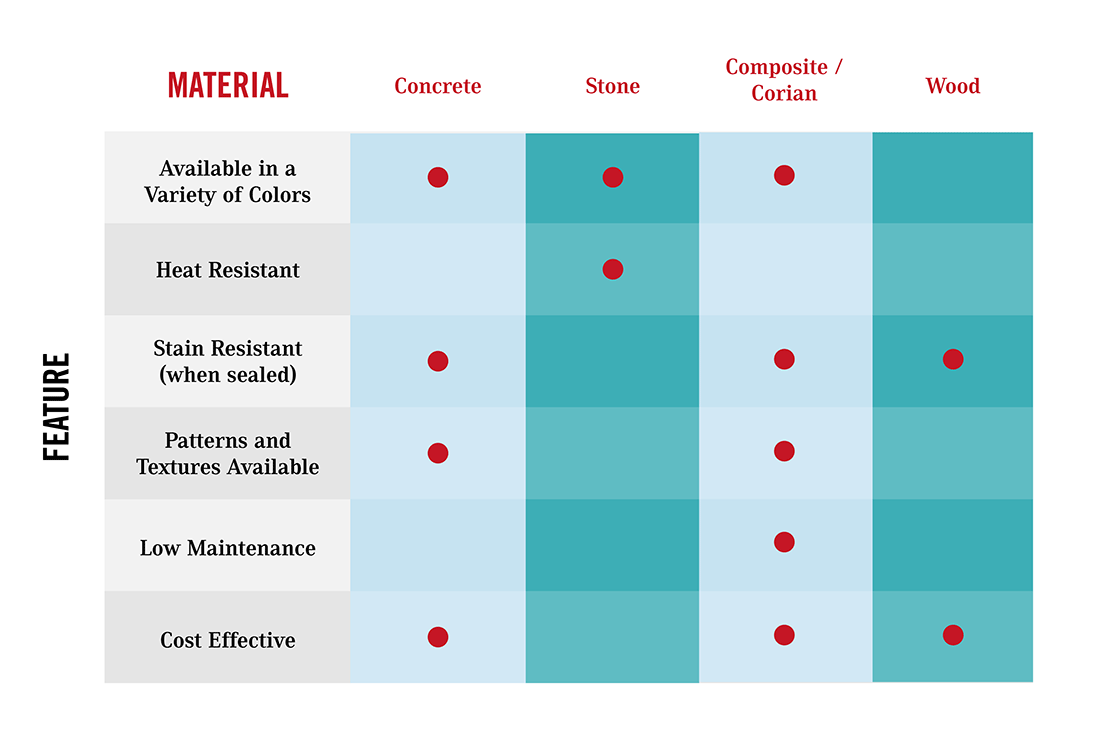
Compare the features of four countertop types.


A kitchen countertop is much more than a space to set your coffee, cooking utensils and small appliances. It can be a statement piece in what is a principal gathering place of the home. Because countertop material greatly affects how the space looks and feels, you’ll want to determine what’s right for you. Consider these pros and cons.


Concrete Countertops

Concrete countertops: Pros and cons of concrete countertops

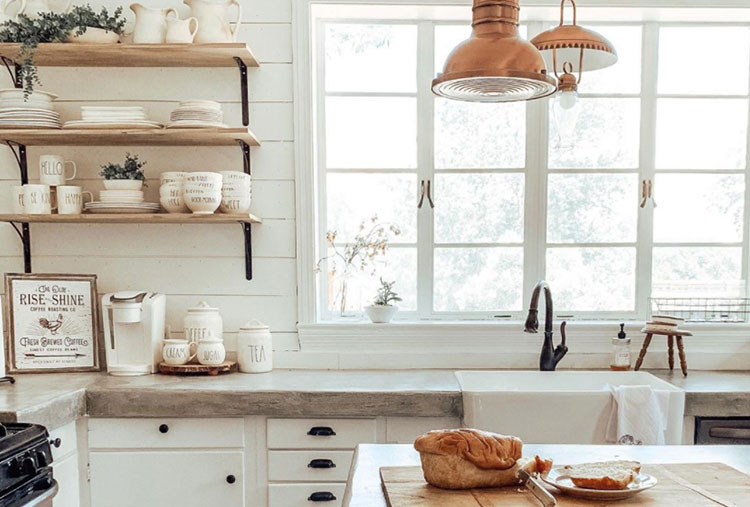
Gray concrete counters have an earthy texture amid white walls and cabinets, lending a light, airy feel to this space and allowing the Leland® pull-down faucet in Venetian Bronze® to stand out. (photo: @charlotteshappyhome)
The popularity of concrete in kitchens continues because of the material’s versatility. If you’re willing to invest the time and effort to keep it properly sealed, concrete is a fantastic choice because it can be poured and colored to fit any space or style.

Pros: Relatively inexpensive, stain resistant (when sealed), grout lines aren’t visible when seam filler is used, limitless color and shape options, endless edge details and textures possible, accepts inserts and inlays.

Cons: Requires regular resealing but cannot tolerate heat once sealed (heat can cause discoloration).


Stone Countertops

Stone countertops: Pros and cons of stone countertops

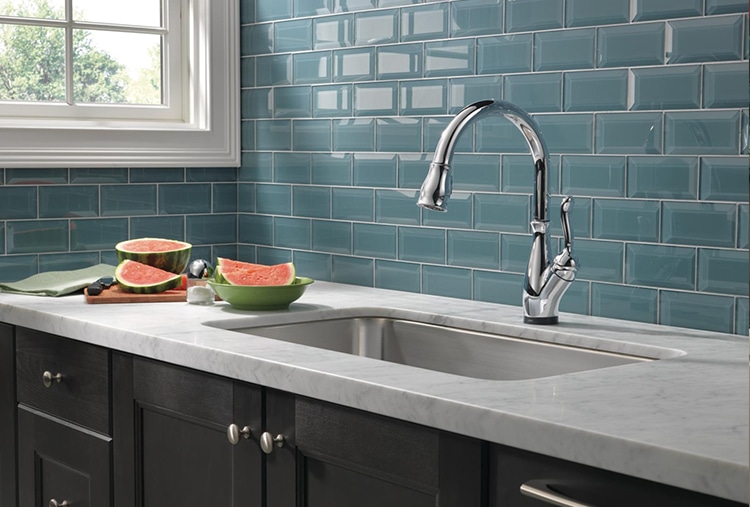
Stone counters have a natural look that fits well in traditional spaces, and they’re also available with clean lines and colors to make a statement in contemporary kitchens like this one, featuring a Leland® pull-down faucet.
This category includes marble, granite, quartz and engineered stones and is a popular choice. Because of the many options for color and surface style, you can create a completely customized look with stone countertops.

Pros: Tends not to chip or dent, comes in a variety of colors, is relatively heat resistant.

Cons: Can be more expensive, tends to be porous and likely to absorb stains, requires resealing a few times per year (except for quartz, which never needs resealing).


Solid Surface Composite (Corian) Countertops

Composite countertops: Pros and cons of solid surface composites

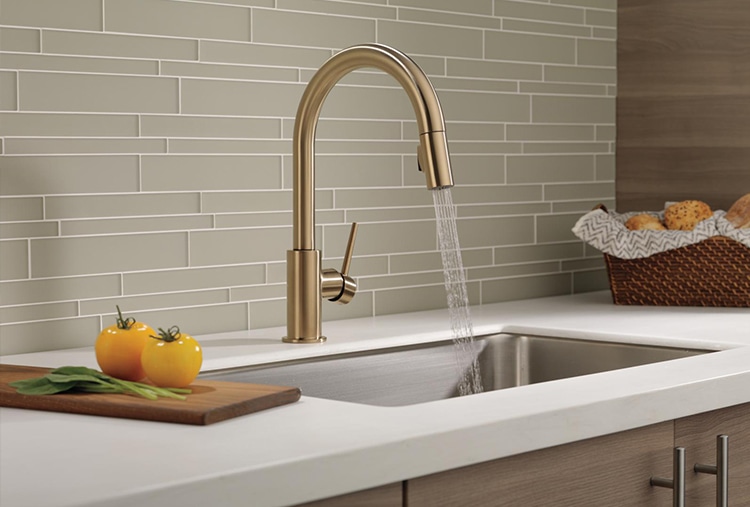
Composite surfaces are durable and have colors to suit nearly any design style. This clean white counter is perfect to showcase a stunning Trinsic® pull-down faucet in Champagne Bronze™.
If you like the look of marble and granite but want something more cost-effective that won’t damage easily, look no further than Corian. If you have kids who frequently spill things, composite surfaces are a great choice because they tend not to stain.

Pros: Creates a durable and smooth surface, is available in a rainbow of colors and many patterns, can create a seamless look with a kitchen sink and backsplash, is low maintenance (doesn’t require resealing).

Cons: Is not heat resistant, and lighter colors can absorb stains if not sealed.


Wood Countertops

Wood countertops: Pros and cons of wooden countertops

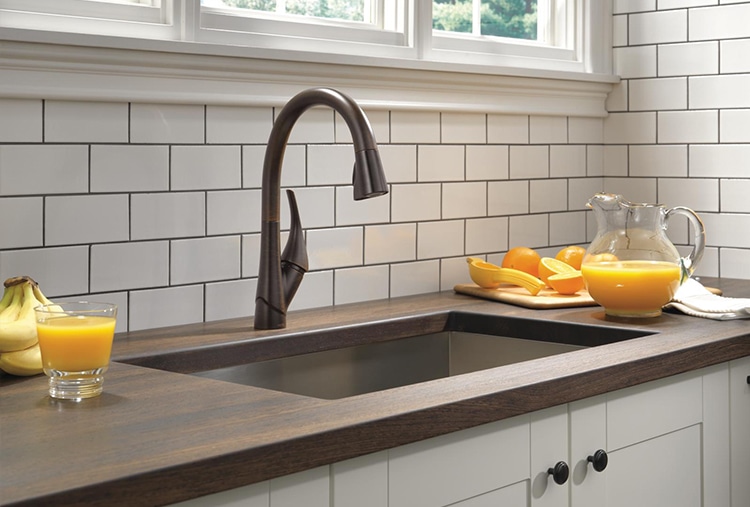
Wood is a natural choice for adding warmth to a kitchen, especially paired with a rich finish like Venetian Bronze®, shown here on an Esque® pull-down faucet.
From variegated butcher block to solid wood countertops, wood remains popular for bringing warmth into a kitchen. It’s also a softer and quieter surface, better to absorb the impact of glasses and dishes and the commotion of kids nearby.

Pros: Can be used as a prep surface if sealed with food-safe protective sealer, is more forgiving if fragile plates or glasses are dropped.

Cons: Requires regular resurfacing, tends to discolor if left wet, can discolor from heat.


Comparing kitchen countertop materials

Is replacing your countertops part of a larger kitchen renovation? Check out Delta Faucet’s Pinterest board for inspiration.